[00:00:00] Speaker A: Hello beautiful people and welcome to another segment of Complete Wellness with Cindy the Busy Woman's Cheerleader. This is the channel where women from all walks of life can stop by, get tools and resources to help them thrive. 360 in mind, body, spirit and finances. I invite you to stay connected, subscribe to this channel and visit me
[email protected] now for today's segment.
Hello beautiful people. Welcome to another segment of Complete Wellness with Cindy, the Busy Woman's Cheerleader. So super excited as usual to be here today. But at first let's do a little
[00:00:36] Speaker B: Housekeeping Entrepreneurs don't just need annual tax pros. They need an accounting partner that understands the nuances of their industry. All year long, Envision Tax and Accounting Services supports you and your business with full service accounting, bookkeeping, payroll tax services and expert business consultation delivered by a team with over three decades of experience.
Innovative entrepreneurs trust Envision Tax and Accounting Services to create smart systems, leverage the right technology and build financial processes that support long term growth and profit. Whether you're just starting out, are an established company or a nonprofit, we meet you where you are, customizing virtual or traditional accounting solutions that fit your workflow, budget and goals. Got questions? We've got answers. Contact Envision Tax and Accounting Services today to schedule your free consultation. Visit us at www.etaaservices.com or by calling 407-951-1492 and let us help you enjoy your envisioned business.
That's www.envisiontaxandaccounting.com or 407-951-1492.
[00:02:00] Speaker A: Some awesome. Our quote for today is success is stumbling from failure to failure with no loss of enthusiasm. And that comes from Winston Churchill. How about that? Woohoo. All right, so I am so excited today to have our guest here, Billy Anson.
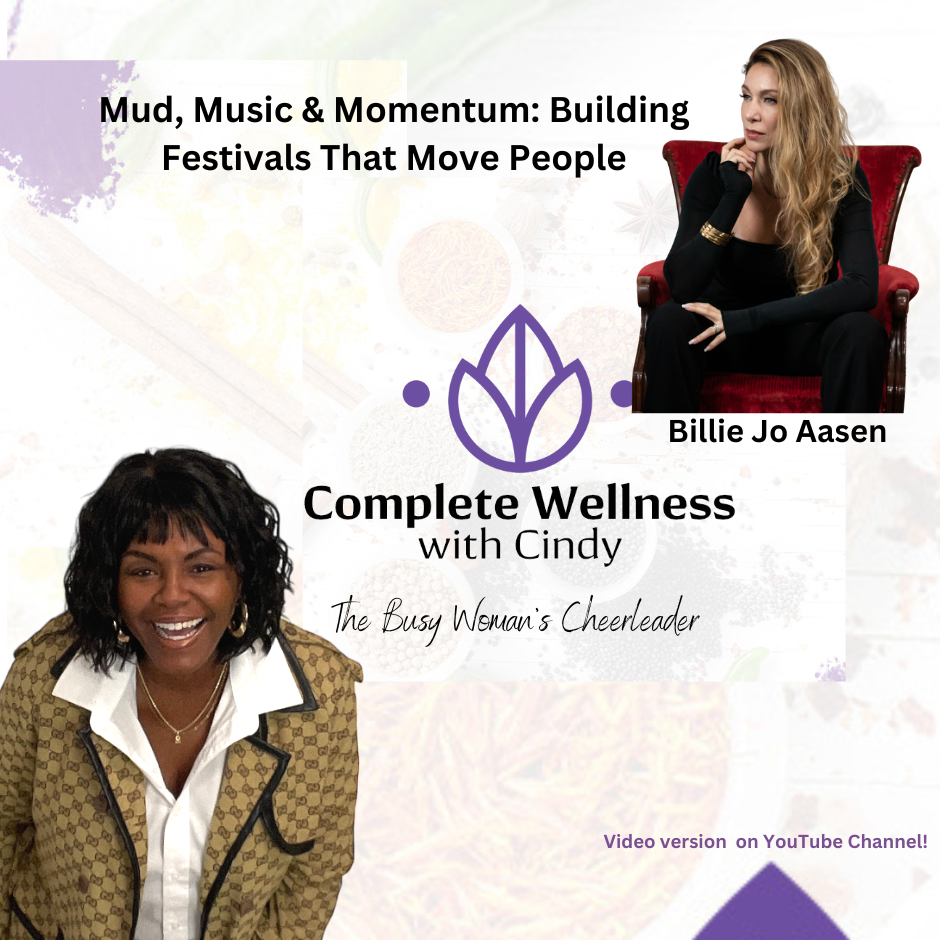
Billy is a dynamic entrepreneur, speaker and change maker. She's the CEO of the festival company Canadian Base, which is a powerhouse known for producing and marketing large scale live events in and across North America. Billy is also the owner and executive of Extreme Mudfest Canadians Large Mud and Music Festival. But one of my favorites from Billy is the nonprofit that she has for mental health for youth which is called Lifted. Please help me welcome Billy. Hello Billy.
[00:02:53] Speaker C: Hey, how are you?
[00:02:54] Speaker A: I am okay. How are you? So listen, we've got a whole lot to unpack here. We've got a lot to unpack, but first of all tell us a little bit about your journey and what basically led up to what you're doing now.
[00:03:08] Speaker C: Oh man, I such A long journey. I don't know.
I found music at a very, very young age.
Um, I came from a household that had a lot, but parents that also fight fought quite a bit.
Um, and so I really got attached to music because I could drown everything out, right? And as a little girl from a small town, I also had this big dream of being famous. And I thought if I was famous, it would be solved. And I. I can have this big, big loud voice.
Um, Fast forward a little bit to when I was 15 and my sister had sent in a demo tape behind my back to Canada's largest festival at that time, at Mount Music Festival. And I ended up getting an opening slot for Loretta Lynn, which was huge, and it was so much fun.
I'm giving the quick Cole's notes here, but I ended up actually landing management deal off of that, and by the time I was 18, artists. But I also wanted to pay down some investment money that the management company was putting into me, so. So I decided to volunteer my time at there at the active mountain office. I would work from 7 in the morning till 3 in the afternoon for free, routing, you know, theaters and tours and learning everything that I could. Just kind of being a sponge. And then I'd leave at 3 o' clock and I'd go into my restaurant job slash jobs, because I worked quite a few back then.
And I really, really got immersed into the business behind the music.
Fast forward from there.
When I was about 23, I was introduced to my first ever show site in Bellingham, Washington.
And I knew so little that I literally said, yeah, let's open a music festival. Great idea. I didn't even know that I needed a US visa to go down. So the first sponsorship deal I ever cut was actually with an immigration attorney as our presenting part so that I could get my visa.
[00:05:12] Speaker A: Wow.
[00:05:13] Speaker C: Wow.
And it worked great. He ended up being a dear friend and mentor for years and years.
And that first festival was the most expensive education of my life. That's what I like to tell people. Okay, you know, we lost $157,000. I was not prepared for that as basically a child by the time years old.
But I paid every bill and I learned a lot. I learned what not to do, which is sometimes more important than even knowing what to do.
You know, I was able to kind of brush off my wounds and say, I've learned it, I can do it again, and I can do it better. And at that time, I actually ended up going in house with my music agent from prior to or an agent that I used to work with. And I was introduced to something called talent buying. And so what that is when you're the broker, it being a customer, festival property or an arena or venue, and the artist teams bring in the talent. But because I had already owned my own festival and kind of had my butt handed to me a little bit, I didn't want people making these same mistakes. So I decided to take, you know, my background of working in restaurant hospitality and then my background of knowing what it takes to put on a festival more of a hospitality focused talent buying company where we would not only broker the talent, but we'd advance the whole show. We'd fly out, we'd run the whole back of house so that that producer could focus on the show. Fast forward from there. We got a great reputation with the artists and being able to help people, where we actually started getting hired full service to build actual brands. And the first one was actually Extreme Mudfest.
So I was hired to create a brand for a Canadian band that had a single Mud. And I thought motorsports and music, it really work. And they had an investor at the time and we ran the festival and it was successful. Investor decided it wasn't for him. He didn't like festivals. Turns out they're a lot of hard work. They're not everybody's cup of tea. Yeah. And anyways, we ended up taking the festival over. That was 13 years ago now. And now we've got Mudfest Gold Lake, we've got Mudfest Bonneville, we just did Mudfest Abu Dhabi and we are going into Moses Lake, Washington as well this year. So four properties, which has been a pretty great growth trajectory.
So we've had Mudfest and then I've done a ton of other festivals. We, you know, we've worked at BC Place Stadium, we've got Rock the Lake Festival in Kelowna. We've done about, well, well over 100 festivals at this point through my career. I've been able to kind of grow up though, with all of these, you know, different people that were starting as interns and are now executives and artists that were just starting their first tour and now are selling at arenas.
[00:08:11] Speaker A: Wow.
[00:08:14] Speaker C: And so Dallas contacted me in 2019 and we're dear friends. We had another business together and he said, I want to start a youth mental health foundation. Mental health is something that's really important to him, obviously, as it is to a lot of us.
And so I did what I tend to always do. It's like, okay, let's do it.
Not really knowing What I was getting myself into, yes, the timing totally. But the timing was very serious because I was going through in vitro over the time. My husband and I had been trying to get pregnant for like three years and it happened. So I was going through my own mental health stuff and really getting a better understanding of, of how it affects everybody's day to day lives. And mental health isn't just one thing. You know, you could be a kid that doesn't have enough food on the table, and that's a mental health issue. You could be a kid with a disability and that becomes a mental health issue. Like there's. So there's such a broad range, which is actually what I love about the foundation because we now say that we use our megaphones to shine light on issues, raise money for them, and help fix them. So we started this. I got pregnant with my twins, and then my twins came significantly premature, like two and a half months premature. And we lived in children's hospital for four months.
My daughters both came out with different levels of ability. So now I was a, a new mom with preemie babies, running a company, starting a foundation and having two children with disabilities. And, you know, the world kind of felt like I've been hitting constantly with a tsunami.
But again, the serendipitous point of it was that I was starting to see all these holes in the system that I just needed to fix. I didn't want anybody to, to continue to go through what I'm going through.
So because we had started the foundation, we were. I was able to look at a bunch of different things and say, hey, I'm really passionate about this. Let's fund it. So, BC center for Ability. For example, there's kids in the region that have cerebral palsy, like low lying, and they want to ride bikes, but they need a special kind of pedal to ride bikes. And you know, when you're a kid, you want to go out and you want to ride bikes with your friends, and if you can't, that sucks. Like, you feel left out. You know, you don't, you don't get to have that normal social bonding.
So the center had carpenter in Vancouver that was doing 100 a year. And I went out with them and said, you know, what do you need? And they explained this to me and they said, fundraising for a 3D printer so that we can actually print a pair every single day and I'll actually fill the whole need of what we need annually.
And so I said, well, how much does it cost? And they told me and I said, done. And we funded it. And now they have that.
One of our big donors had contacted me and there's a hospital here in British Columbia, the Cranbrook Hospital, that services the entire East Kootenai region. So a lot. And in Canada, our health care is funded by the government.
There's pros and cons to that because they only do so much funding. So if something is not within their budget or doesn't fall under their mandate, it doesn't get funded and it can affect a whole bunch of people. So this hospital, they couldn't hold any babies under 35 weeks, even if they're just feeder grower babies.
So they were fundraising for a nicu, but they found a funding gap and I mean, they were flying babies out daily to all over the province. And if you think of that financially on families, emotionally on families, like spending months away at a different, having to pay for food, having to get accommodations, having to leave your other kids, having to take off, time off work, like super difficult.
So Ian called me and said, do you think we could do a benefit concert and build a nicu?
Yep.
So within a couple hours, it was just before the Country Music Awards, I had sent everyone a note being like, we're going to build a nicu. Are you in? In. And when I flew into the country music boards, everyone was like, yeah. And we literally had every major artist in Canada come out and play this thing.
And the Nikki was just opened in November, which was huge. And so through this whole journey, I, I think especially becoming a mom, like when you become a mom, things change. Your perspective changes a lot.
I like to say it made me a better entrepreneur, to be honest with you.
But throughout this whole journey, I've realized we all have a megaphone, right? Like you have a megaphone here, you have a podcast, you have women that are listening.
Because I have big events and I have access to thousands of people. Celebrities have megaphones. You know, a small business owner can have a megaphone in their community, but it's our responsibility to use that megaphone for good, be the change you want to see and shine a light and make the change. If you see something catastrophic happening in a community, it's small businesses that jump up and use their make phones and fundraise for the families or whatever is happening. So that's become a really big passion of mine right now, is teaching people that you can have a for profit business and a non profit element and doing good is good for business. And it's your responsibility to use your megaphone to make that possible.
[00:13:26] Speaker A: Social responsibility is very important for businesses.
I would say a good bit, acknowledge that. But always giving back, it's not like a cliche. Some people, you know, have the mindset that, you know, no one gave it to me. I'm not giving anything back. But sometimes you're not just seeding into who gave to you, you're seeding into your next generation. It's almost like a lifeline. You're seeding into possibly one of your family members, you know, something good that you did, somebody else will reap the benefit from it, you know, and so I think that's very important. When they sent me your information, I thought it was nice because basically what you're doing with your live events, it's for purposes, you know, mission driven reasons for, you know, to help people, servicing people, not just, you know, just to come together. And I'm very musically inclined. So that was like, okay, what is she doing with music? You know, this is great, but to have a purpose behind it, you know, a mission behind it, like you did with the NICU and then some of the other ones that you've worked with over time. And I'm going to ask you that in a minute. But, you know, the bottom line is servitude is serving. A lot of times again, people, you know, they have their hands out, but what are you doing for somebody else, even if it doesn't directly affect you, it's like a lifeline, you know, it's like a lifeline.
So my question. Go ahead.
[00:14:47] Speaker C: Gives people purpose too, right? Like, it's great to build a business. I love building businesses. I love entrepreneurs. I always like, anytime someone wants to build something, I'm like 100% their champion. But when you can do it and a bigger cause tied to it, the game changes completely.
[00:15:04] Speaker A: Yeah, yeah, absolutely. Absolutely, Case. Absolutely. So how. What was. What would you say out of all of those that you've done over the years, besides the nicu? Because I can tell that that is a close ticker to the heart. Besides the nicu, what was one of the experiences, or I would say outcome of one that you did that was purpose driven and it was successful?
[00:15:28] Speaker C: Oh, man.
Actually, I will say one of the most unique ones that we did was when we actually first started the festival, or, sorry, the festival, the foundation, it was in the middle of COVID So in Canada, everything was shut down. We had all of our. Who couldn't get back to work. Like mental health issues in the music industry were a real thing. Like you had people that used to be on tour all the time and were, you know, financing their whole families and everything else, to have all of that just stop and no future of income and what that looks like was near impossible. So what we decided to do is we got a little bit creative and we started doing hotel festivals. So what we did is we bought out hotels that had balconies and a courtyard, and we marketed it saying the parties in your room. So it could be like one, if you purchase a room, it was you plus three friends. You could pre order your drinks, you could, you know, have your charcuterie in your room. Then you go onto the balcony and we throw a three and a half hour long festival in the center.
It was one of the most magical things. Cindy, on just so many different sides. Number one, having our friends back together on stage and like, just see the passion. You could see behind what they were doing and being able to do what they love was so important. It was getting them back to work so they actually felt like they were, hey, I might still have a future here. You know, an artist works so hard to get known and then something like that happens and all that work and money spent can go away.
But the interesting trickle effect was the emotional effect it had on everybody in the crowd. The people that were on the balconies just crying and being able to be with friends again. And yeah, it was only four friends, but they were, you know, playing beer bong with other balcony suites and they were, you know, cheering each other and saying hi and introducing each. Each other. Like, we were not meant to be alone as human beings.
[00:17:29] Speaker A: Oh, yeah. Yeah, absolutely.
[00:17:31] Speaker C: Like, isolation is one of the worst things that you can do, even if you're an introvert. Like, everyone was hitting their wall.
[00:17:37] Speaker A: Yeah. And so I'm. I'm introvert. So I can speak for I can speak.
[00:17:43] Speaker C: Totally.
[00:17:44] Speaker A: Yeah.
[00:17:44] Speaker C: Yeah. But like, even you probably started to be like this a little bit much,
[00:17:48] Speaker A: you know, and so you find things to do. But, you know, when you're. You're talking about them coming back together, you know, during that. The course of the pandemic, and basically what you. You were hearing when they would sing, that was a portion of their souls. And I say that because the nonprofit that I spearhead a great Fermont International some years back, we did our first compilation album, and it was all genres.
And I remember when we were going through the music and again, by me being musically inclined to. It's like, I can. I could feel the passion behind the words.
You know, we were trying to narrow it down how many people are going to be a part of the cd? But it's like, I could feel the passion. It's like you want to just take everybody's. Like, everybody. Yes, yes, yes, yes. But you could feel the passion behind music. Music tells stories. It tells stories of the soul. It tells stories of. Of your. Your. Your journey. It tells stories of, you know, time to come, what you're expecting it. It tells stories.
So to have it, I would say purpose driven, mission driven. That's a completely different level of music. I mean, one that really words can't express. You have to experience it.
[00:19:02] Speaker C: Yeah. And like I said, it. It really was the kickstart of using megaphones for good. So, like, everything that we do, we have music involved in it.
We have a really cool pilot program actually coming together right now where we're gonna pick X amount of schools, and we go in and we give them a bursary for their instruments. So $10,000 for the school, for the instruments. But then we go into the school for a half day and we talk about, you know, making the impossible dreams possible and shooting for the stars and leadership within your school. And then we do a concert with it. Because a lot of artists, I mean, they got into music because they needed to talk about what was inside.
And you constantly hear that from a lot of people. Their love of music is literally because it was their lifeline, like you said.
[00:19:50] Speaker A: Yeah.
[00:19:51] Speaker C: And I mean, my lifeline, I. I thought I was going to be the one on the stage. I'm now the one building the stages. Doesn't matter.
[00:19:58] Speaker A: Yeah, you're still there. You're still there in that. That arena. You're still there. That is absolutely beautiful. So this other question.
How do you define success?
How do you define success? What is your definition, Billy's definition of success? Because I'd asked you earlier, I said, which event was most memorable for you besides the nicu?
That was a success.
You know. Tell me, what is your definition of success? How do you define success?
[00:20:33] Speaker C: To me, success is a feeling. It's not a physical thing of all the things you can buy and what you can do.
Because when you have that drive and that purpose to. To do something where you. You literally want to wake up every single day and do it, and to the best of your ability, it fills your soul in a different way. And for me, that is.
That is these events. And now having the purpose piece with it has been a game changer for me. But if I were to. To define it in kind of one sentence, success, to me is building a life that you don't get vacations on.
[00:21:11] Speaker A: Say it again.
[00:21:13] Speaker C: Success, to me, is building a life that you don't need a vacation from.
[00:21:19] Speaker A: Okay.
[00:21:19] Speaker C: Because every day you want to be a part of it.
[00:21:22] Speaker A: Okay, Okay.
I would agree. I would agree.
And I would add, it's to your specifications.
A lot of times people define that word to another person's or another group's, you know, measured measuring stick. Their ruler.
[00:21:42] Speaker C: Yeah.
[00:21:42] Speaker A: As to what success is, success is a personal definition.
If you complete a goal, you check it off. That's success. If you start something and finish it, that's our thing for this year. Focus and finish. You know, that's success.
If you set out to run a half a mile and you actually run a mile, okay, the fact that you made that half a mile was successful, but then you went the extra mile, that's even more successful. I'm always, like, interested in finding out what people's definition of success is, because a lot of times. And I say this, preaching to the choir. I'm my own worst critic. Okay? So whenever somebody says, well, oh, you're so successful, you've done this, you've done that. Okay, to whose standard?
You know, because like. Like, for myself, I'll say.
I'll never say that I've arrived because I'm always a work in progress. I'm always looking forward to something new or to growing. Like you did your mud festivals. The festivals, you grew it from one to the other. So you're always looking to grow, not just become stagnant because you had a successful event. You want to continue along your terms, your success.
[00:22:59] Speaker C: But I would add to that, Cindy, and failing is also success because you actually try.
[00:23:06] Speaker A: Yes.
[00:23:06] Speaker C: You actually set a goal, and you went out and you tried. And maybe it didn't turn out exactly how you thought, but you were successful in being brave enough to get out there and do the thing, you know,
[00:23:17] Speaker A: and now you can look at, yeah, yeah.
[00:23:20] Speaker C: And you can do the next thing and the next thing. And yes. You know, you always hear the stories of people saying, well, I'm going to be successful when I've made a hundred thousand is my business. Well, then they hit the hundred thousand and they're like, oh, well, I need to do this, and then I need to this, or I'm going to be successful when I run my first half marathon. Well, three years down the road, they're doing marathons and triathlons.
The little moves, depending on where you're at in your season of life, I find one of the things that I'm very, very proud of and not, you know, it's interesting as an entrepreneur because it's probably the opposite of what people would define as successful, but I feel very successful that I have two little girls who are four and a half years old.
They know mommy works, but they have an experience of having a stay at home mom because I've designed my life to be such an intricate part of their life. When they're out of preschool and we can go horseback riding and we can go to gymnastics and we can go and do those things, to me, that' really successful because they get that experience and I get that experience because they're also right. I could turn around and say, I need to make this marker and, you know, shoot for it. Which, of course, I am a business owner. We have those, those milestones. But I could have made it so much more large and then worked more and more hours. But then would I have felt successful when my children were this little? Would I have turned around?
I wish I could have spent more time.
Time is something that we don't get back.
[00:24:54] Speaker A: And you read my mind. Absolutely. My mother said that to me one time and it just clicked on all types of elements in my brain and she said, listen, she said, don't waste time. She says, once that time is gone, Cindy, you don't get it back.
You know, that was like a turning point for me mentally, because when you're younger, you're really not. I don't want to say you're thinking you're indispensable.
No, I will never say that. What I will say is you just figure you have these small numbers and you've got time.
But as you begin to calculate these numbers, you realize you wasted some time that you can't get back. So everything that you do in front of you going forward, you have to make it count.
You have to make it count. It has to be impactful, you know, it has to be aligned with purpose. It has to be aligned with, with your, your destiny, where you're supposed to be. At this point in particular, you know, time, it all has to align and it all has to make sense. We don't have time to waste.
We do not have time to waste. So, you know, I was going to ask you about the balance, but you hit it. Your balance is making sure that your children also know that though you work, they are equally as important
[00:26:16] Speaker C: 100%. And I think for women's specifically this word, balance, everyone's like, how do you balance it all? What's Your best.
It's not a real thing. Let's be very honest. When I am kicking ass at work, I am probably failing at something at home. When I am a hundred percent with the girls in the afternoon, I'm probably, you know, missing an email or should be on a certain. I can't be on because I'm with them.
It's not about balance. It's about choices. What are you going to choose with this time that you have in this season of life that you're in? I also know that my kids are going to go to kindergarten and I'm going to get more time back and I'll build X, Y and Z. Then my kids are going to grow up and, you know, go off and start their own journeys in their own lives. I'm going to have more time then. My biggest purpose right now, or I guess my biggest project right now is.
Have you ever read the book buy back your time by Dan Martell?
[00:27:14] Speaker A: I have not read it. I've heard about it.
[00:27:17] Speaker C: It's great. I suffered massive burnout about two years ago and a really good friend of mine was like, just read this book and it's all about buying back your time so that your time used is super impactful. And especially as a business owner, because you want to do all of it right. Like, nobody can do it good enough. No one will do it as good as you. You have to, you know, make sure the panels right. You have to do the invoices, you got to do the marketing, you got to do the operations, you got to be customer, you got to take the trip, you got to do the speeches
[00:27:45] Speaker A: like hats, 40 hats and one head.
[00:27:49] Speaker C: Yeah, totally. Like, what is it that you can actually hand off to someone because it's their zone of expertise and you can trust that they're going to do it. Of course, you got to check it. But if you 80% done by someone else is absolutely fantastic. So if you can buy back some time. And for me, if I can buy back time where, you know, I have someone come in and clean my house and do laundry so that I'm not doing that, instead I'm out in the yard with my kids or we're going on an adventure, if I can buy back my time with even little things like grocery deliveries instead of spending X amount of time in the grocery store or buying back my time at work, where there's a position that I could probably hire a contractor for to get a project 80% done, I'll do the first 10. The creative piece where this is the vision. They can go in and execute X, Y and Z and then I'll put my magic spin on it in the last 10. But I bought back 80% of my time so that I can be more impactful, whether it be at home or whether it be building the foundation or. You know, I just got back from speaking to hundreds of kids in the Okanagan on leadership and mental health. Like, I love that kind of stuff, so.
[00:29:00] Speaker A: Right, right.
[00:29:01] Speaker C: Being focused on is really important. And that's where I'm at in my seat life right now.
[00:29:05] Speaker A: Awesome. That is absolutely awesome.
When you made mention of that, the word balance, somebody the other day asked me about the mind, body, spirit, you know, thrive360 on purpose. Mind, body, spirit and finances. And I was telling them, they said, well, how do you achieve it all at one time? I said, you don't.
You don't. It's about knowing what needs to be done, what you need to spread yourself across, and doing the best you can, even if it's a little bit each day, to make sure that all of those areas are beginning to balance. It is always a work in motion, a project that is ongoing, a personal project that is ongoing. Because if one is up, the other one is down, one is in the middle, the other one has been forsaken. So when you balance those things, not imperfection, just with intention, do the best you can to feed those four corners of your life that allows you to operate at some level of balance. But me personally, I do not believe that any one individual can consistently achieve that one versus the other.
It has to be a balanced scale of doing a little of each every day.
So when you say that about that balance, it was like, yeah, that's like, that's what we say, you know, this mind, body, spirit and finances, all of these things have to work together in tandem.
If not, something is going lacking and that something is going black and gets inside of you, you know, it's. It's inside of you. So a little bit of each thing every day. Like you said, you know, you work and, you know, you've got to take calls, you've got to take emails, you got to deal with the kids, you know, whatever else is going on in your life personally, you deal with a little bit of those each day to your successful standard.
And that allows you to have that, that line of balance with all that you're juggling.
[00:31:11] Speaker C: So finding your friends that work great. Like, I operate very well early in the morning.
I get up at 5.
[00:31:19] Speaker A: Me too, me too.
[00:31:21] Speaker C: I like Coffee, I sit in the hot tub. I do my stuff. I'll send my emails. But, you know, one thing that in the this year specifically that I have a really big focus on is fitness. You know, I'm coming into my fourth decade, and I want to be healthier in my 40s than I was in my 30s. And why do I want to do that? Because I want to play soccer with my grandkids. You know, be good to me so I can be good to them. So I got a personal trainer. I, you know, I'm doing X, Y and Z. Could I have done this three years ago when the girls were one? Not a chance. I. There's no way I could have done it. But what I did do in between was knowing that I needed to, like, kind of make fitness part of my mental health journey because I needed to move.
If I was taking a conference call, I was going for a walk and doing it. You know, if I had a book I wanted to read, it wasn't. No, I don't have to sit in front of the fireplace cozied up with that book and do X, Y and Z. Like, I can. I can read for 10 minutes before I go to bed instead of having to sit down and read the whole book in an hour.
Yeah, like. Like you say, it's. It's the little things, or. People always ask me, how do you get so many big projects done at once?
Well, I set time aside and I work on it an hour a day. You'll be so surprised how far you can get if you just work it.
And then eventually you get it and you're like, yes, you know what? I'm gonna that half day on Monday and I'm just gonna do that. I'm gonna shut everything else off and I'm gonna do this. And.
[00:32:47] Speaker A: Yeah, push and complete it. There you go. Absolutely.
Just chipping at it. Just like anything else, you know, you're building something, chip at it a little bit at a time. Next thing you find out this big mountain that you thought was, you know, not able to be conquered. You've conquered a mountain because you've chipped at it a little bit at a time. A little bit at a time. A little bit at a time. So I've enjoyed this. Let me ask you this.
What would you tell your 21 year old self at your age now? What would you tell your 21 year old self?
[00:33:24] Speaker C: Don't change damn thing.
Just keep going.
[00:33:29] Speaker A: All right?
Just keep going. I love it.
[00:33:36] Speaker C: Do the work. Keep going. You know, people look at you know, sometimes their 20s and they're like, ah, I wasted all this time, you know, I got out of university or whatever and I spent a year and I partied with my friends and I could have been building. I could have done this. No, because you guys where you needed to party with your friends, that I have fun. Because you're not going to be doing that in your 30s and 40s, you know, hopefully not. Yeah, yeah. Life changes a little bit.
[00:34:01] Speaker A: Yeah.
[00:34:03] Speaker C: Be you need to meet yourself. Where do the thing go. Fail a little bit to feel what failure feels like, but mostly to know that you can get out there and do something. You know, try everything, go out and have fun, explore. If you, if you want to change something in your life, change it, habit, stack it, do little things every day, move towards that people. But don't ever get stuck in this perfect perception of what life and business and everything's going to be. Because I'll tell you what, life happens when you're making plans. So set yourself up for success and being strong in who you are. Work at your goals every day, take risk and just go for it.
[00:34:51] Speaker A: Thank you. Thank you so much. I've enjoyed our conversation. We'll have to do it again soon. We will have to do it again.
[00:34:57] Speaker C: Yes.
[00:34:59] Speaker A: All right.
[00:34:59] Speaker C: Yeah.
[00:35:00] Speaker A: I have enjoyed speaking with you, Billy, I really have. And we'll have Billy's information in the description. Billy, tell people how they can get in contact with you.
[00:35:12] Speaker C: Instagram is very easy. Jason.
Cindy, I'll put it in the link.
And you know, if you're, if you're a female or an entrepreneur and you're building something, you need a little advice. DM me. I'm happy to chat at any time.
[00:35:24] Speaker A: Awesome. Awesome. I love it. I love it. Billy, thank you so much for joining me. Thank you, thank you, thank you.
[00:35:31] Speaker C: Thanks for having me.
[00:35:32] Speaker A: All right.
[00:35:34] Speaker D: Are you looking for a savvy speaker to add value to your upcoming event? Cindy, the busy woman's cheerleader empowers groups across the globe to thrive. 360 on purpose in mind, body, spirit and finances. As a dynamic speaker known for delivering insight in a relatable tone, Cindy brings real world experience, practical strategies and an energy that keeps audiences engaged from the very first minute. She's a thought leader, serial entrepreneur, author, leadership coach, humanitarian and purpose pusher that produces impactful dialogues. Her style blends clear expertise with authentic storytelling and humorous candor, making even complex ideas attainable and actionable for every audience. Be it faith based co ed or secular. Whether your goal is to empower educate, or spark positive change. Cindy creates an inclusive environment where people feel seen, motivated and ready to act. She's now accepting new speaking engagements. Book the Busy Woman's Cheerleader today. Submit your request by email to thrivethesindyrand.com or online through www.thecindyrand.com.
make your event most memorable and remember, together we can thrive360 on purpose.
[00:37:02] Speaker A: Thank you again for tuning in to complete wellness with Cindy, the busy woman's cheerleader. Follow me on social media. IzzyWoman's Cheerleader Remember, together we write our stories, share our journeys, create memories, and leave our marks in history. Until next time. Peace, blessings and joy be multiplied to you. Ta Ta.